
Every EMS student begins their training with the same goal, to build the skills needed to assess patients confidently and accurately. Having the right tools from day one shapes that learning experience, especially when practice sessions move from the classroom to real clinical environments.
For trainees balancing coursework, simulations, and clinical rotations, dependable personal equipment becomes part of everyday readiness. As students progress through early skills such as auscultation, blood pressure measurement, and basic clinical assessment, kit selection becomes more than preference.
The right setup helps reinforce muscle memory, organize learning, and reduce stress during hands-on evaluations. MedTechKits supports this journey by offering purpose-built gear designed to match different training stages without overwhelming students with unnecessary tools.
This article highlights three of their most practical bundles for EMS learners: the Basic Clinical Kit, the Basic Vitals Kit, and the Intermediate Vitals Kit. Each one serves a different level of training, allowing students to pick the kit that aligns with their coursework and clinical demands.
First, trainees should clarify their current training objectives and typical learning environment. If coursework focuses on basic patient assessment, scene safety, and early clinical observation, the Basic Clinical Kit usually covers what a student needs for labs and initial shifts.
If the curriculum emphasizes measuring and interpreting vitals like blood pressure, pulse oximetry, and routine auscultation then the Basic Vitals Kit aligns more directly with those exercises. Students preparing for intensive clinical rotations or courses that require finer auscultation skills should consider the Intermediate Vitals Kit for its upgraded stethoscope and improved long-term performance.
Next, match practical features to immediate needs rather than buying for future hypotheticals. Portability and simplicity matter when students move between class, simulation, and clinical sites; durability and acoustic clarity matter when instructors expect precise technique.
Use a short decision checklist: what will be practiced most this term, how often will the kit be carried, and how much does the student plan to rely on the same tools across multiple semesters? Choosing the kit that satisfies the checklist minimizes wasted expense and supports focused skill development.
Finally, discuss choices with instructors or clinical preceptors, they can confirm whether a specific model will be appropriate for upcoming evaluations. By choosing pragmatically and caring for gear from the start, students build both competence and professional habits that transfer to real EMS work.
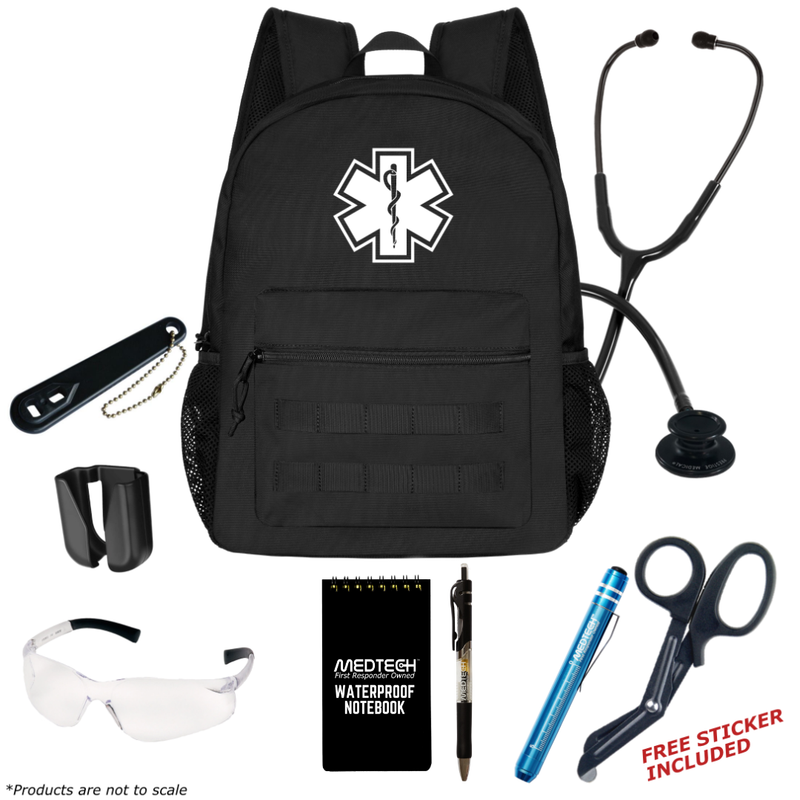
The basic clinical emt kit by MedTechKits is designed for students who are just beginning to handle real assessment tools. It supports early EMT coursework by giving learners dependable equipment they can use during skills labs, practice sessions, and initial clinical exposure.
The focus is on simplicity, portability, and durability, allowing new trainees to build confidence without being overwhelmed by unnecessary gear. Its lightweight design and ease of organization make it especially useful for students who want a clean, manageable setup throughout their early training days.
Prestige clinical lite stethoscope (Your choice of color)
Trauma shears
Penlight
Safety glasses
Notepad
Oxygen key
Backpack (Optional)
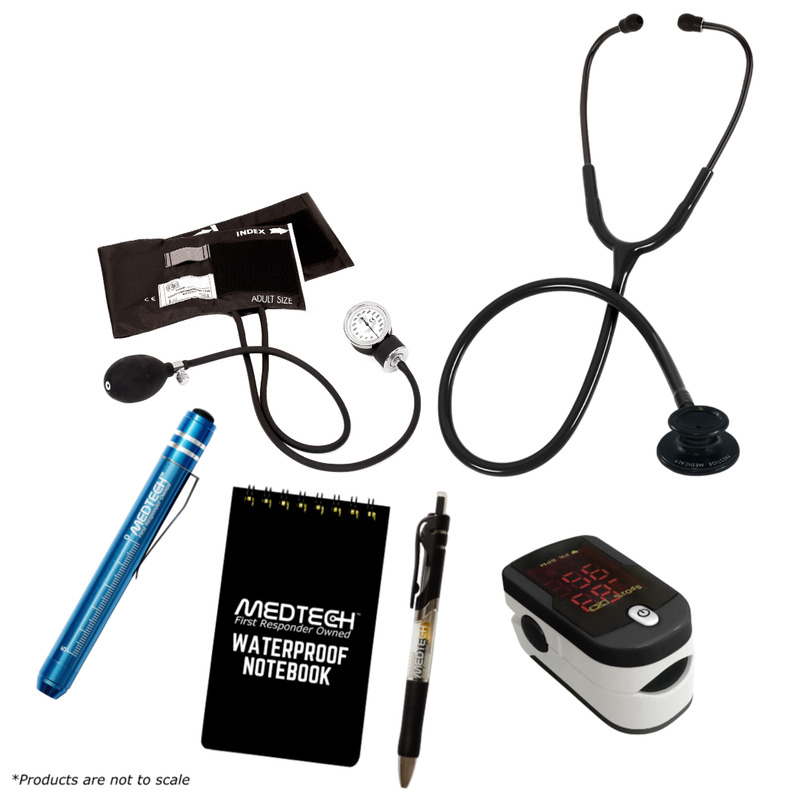
The basic vitals kit by MedTechKits supports students who are beginning to establish a consistent routine for taking vital signs. It offers a practical set of tools that help learners develop the accuracy and rhythm needed during class scenarios, partner drills, and early patient assessments.
The kit’s lightweight setup makes it easy to bring to labs, simulations, or clinical sites, giving students dependable access to the instruments they use most frequently during training. It’s an efficient choice for learners who want a reliable vitals-focused kit without stretching their budget.
Prestige clinical lite stethoscope
Blood pressure cuff (sphygmomanometer)
Finger-tip pulse oximeter
Penlight
Notepad
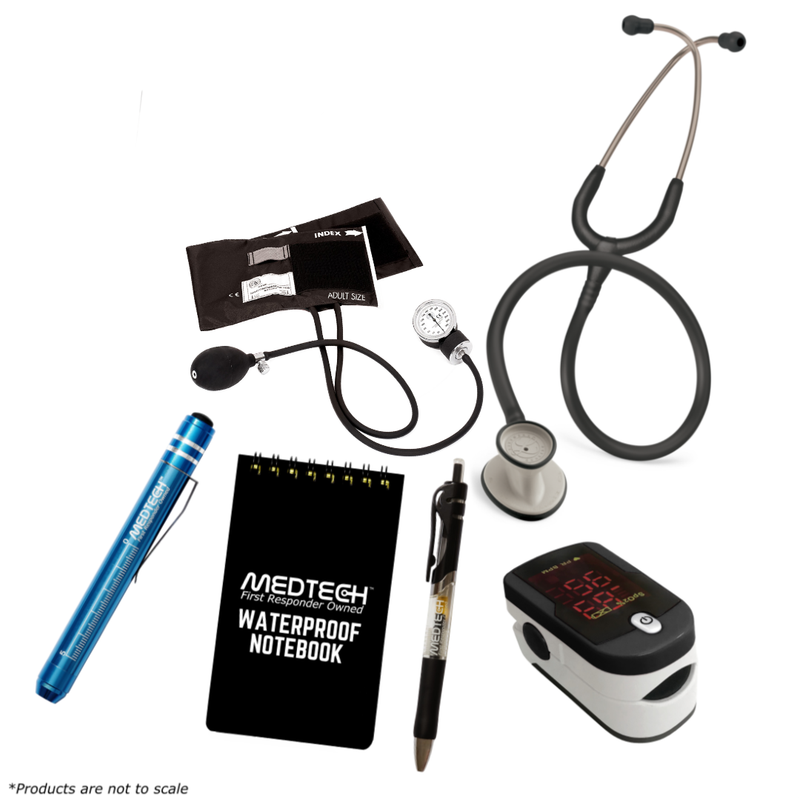
The intermediate vital sign kit by MedTechKits is designed for students advancing into more demanding clinical environments and coursework. It supports more refined assessment skills, especially as trainees begin identifying subtle variations in breath, heart, and bowel sounds.
With improved acoustic performance and a more durable setup, this kit helps students practice at a level that more closely reflects real EMS fieldwork. It is well suited for learners who want to invest in higher-quality tools that will stay useful as they progress through school and into early professional roles.
Littmann Lightweight II S.E. stethoscope
Fingertip pulse oximeter
Blood pressure cuff
Penlight
Notepad
Reliable assessment tools give EMS students the consistency they need to improve their performance during drills, simulations, and clinical interactions. When learners practice with the same equipment day after day, their technique becomes smoother, their confidence increases, and their assessments become more accurate under pressure.
Using dependable gear also reduces the hesitation that can come from switching between unfamiliar tools, allowing students to focus fully on patient evaluation. As coursework becomes more advanced, having a stable set of tools across labs and clinical sites reinforces repetition and strengthens skill retention.
Whether students are just beginning with basic assessments or moving toward more detailed vitals and auscultation work, MedTechKits provides kits that support each step of that growth, helping learners see why having a personal EMS kit matters. This consistency helps learners build habits that carry into professional patient care.
Consistent equipment also encourages students to take ownership of their training. When learners carry their own tools, they naturally become more attentive to care, maintenance, and proper handling, habits that mirror professional expectations in the field.
Learning to assess patients accurately requires not only knowledge but also the right tools. The medkit delivers organized, durable kits that allow students to focus on mastering skills rather than hunting for equipment. Each kit is designed to match a specific stage of training, helping learners progress efficiently from classroom labs to clinical rotations.
These kits combine essential instruments for clinical assessments, vital-sign measurement, and hands-on practice in a single, portable setup. By providing stethoscopes, blood pressure cuffs, penlights, and other core tools, MedTechKits ensures students have everything they need to practice reliably and consistently.
An organized approach reduces distractions, builds confidence, and allows learners to dedicate more time to skill development. Whether starting with basic assessments or advancing to more refined patient evaluations, MedTechKits supports every step of the learning journey.
Selecting the right EMS training kit is more than acquiring equipment, it’s about building a foundation for practical learning and long-term professional habits. Each kit from MedTechKits is designed to meet specific stages of training, allowing students to focus on the skills most relevant to their current coursework and clinical experiences.
By matching the kit to individual needs, learners can streamline practice, reduce distractions, and maximize the value of hands-on training. Beyond skill development, having a personal, well-organized kit fosters responsibility and independence.
Students quickly learn to care for their tools, maintain readiness, and adapt to different clinical environments. These habits extend beyond the classroom, shaping behavior and attention to detail that will benefit them throughout their EMS careers.
Ultimately, choosing a kit thoughtfully, using it consistently, and maintaining it properly ensures that every student is prepared to handle assessments with confidence. MedTechKits not only provides the right tools for each stage of learning but also supports the growth of competent, professional, and self-reliant EMS practitioners.
Q1. Which kit should I choose as a beginner EMS student?
For students just starting clinical skills, the Basic Clinical Kit is the best choice. It provides all the essential tools needed for early patient assessments, labs, and initial clinical observation. Its simple and portable design ensures beginners can practice confidently without being overwhelmed by unnecessary equipment.
Q2. Do these kits work for both classroom practice and clinical rotations?
Yes, all MedTechKits bundles are designed for versatile use across learning environments. They contain professional-grade tools suitable for classroom labs, simulation exercises, and supervised clinical shifts. This ensures students can build consistent skills that directly translate to real-world patient care.
Q3. Is it worth upgrading to the Intermediate Vitals Kit?
Upgrading is beneficial for students advancing into more complex clinical coursework or intensive rotations. The Intermediate Vitals Kit includes higher-quality instruments, such as an upgraded stethoscope, which supports more accurate assessments. Investing in this kit helps students develop refined auscultation skills and long-term usability.
Q4. How do I maintain and care for these kits?
Proper maintenance starts with cleaning tools after each use and storing them in a dry, organized compartment. Avoid exposing equipment to extreme temperatures or moisture to prevent damage. Regularly checking functionality and handling items carefully ensures the kits remain reliable throughout training and beyond.
1. Equip and Excel with the Basic EMT Kit For EMS Students
2. Best Everyday Backpack for EMS Learning and Clinical Work

